
Most of the case studies in this portfolio are drawn from work on Trofi POS.
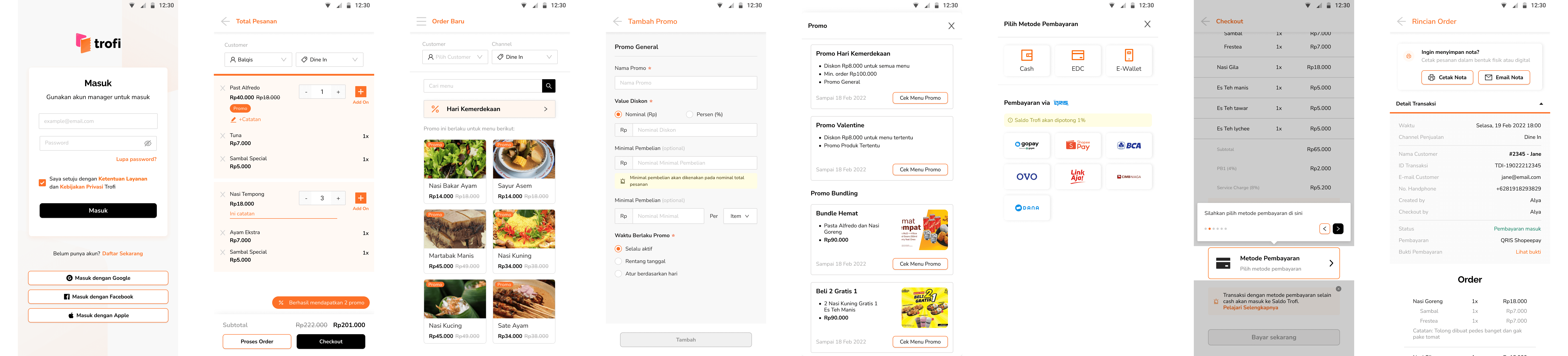
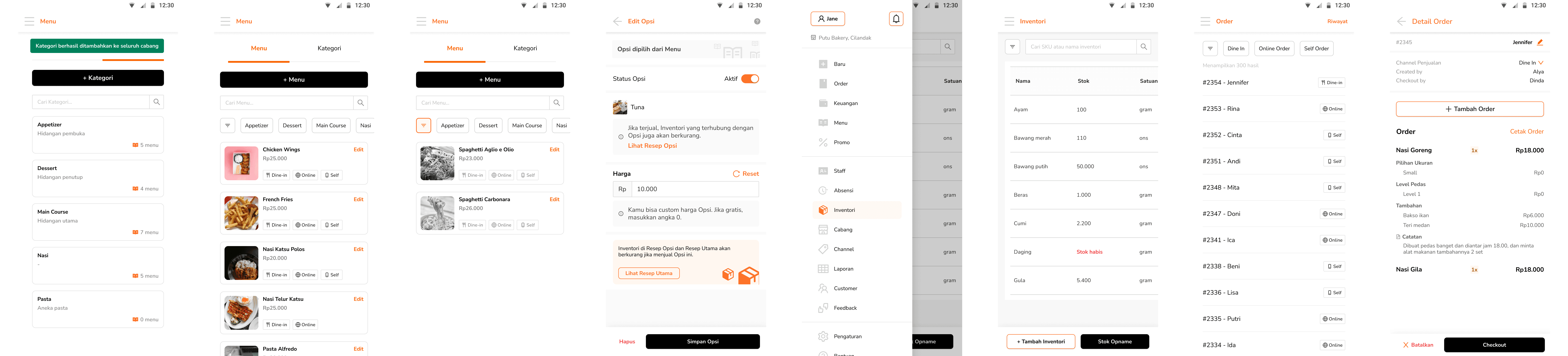
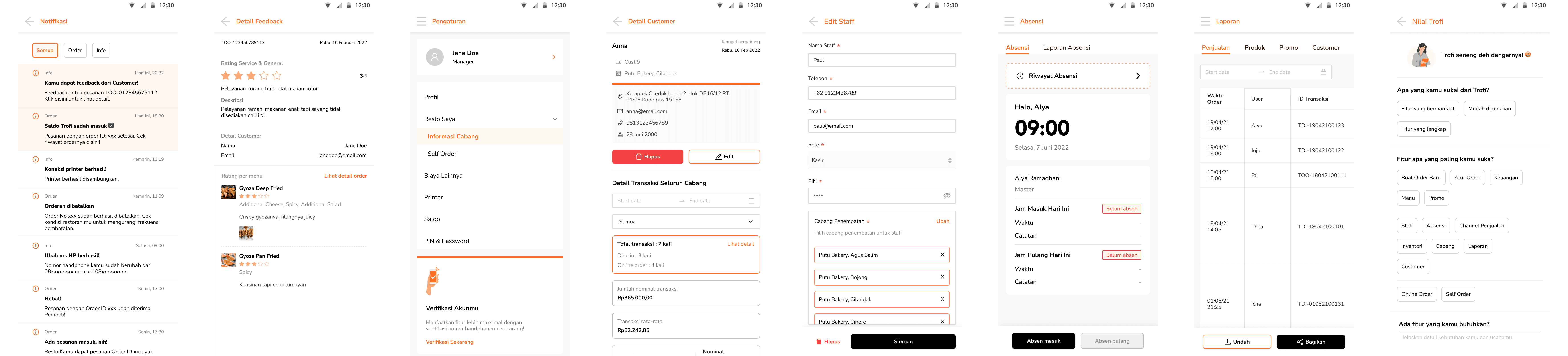
Trofi is a Point of Sale (POS) application specifically designed to help F&B businesses in Indonesia manage their restaurant operations more efficiently. It is presented here as a journey through its features, beginning with account setup to other advanced tools.
Earlier works and projects outside of Trofi can be found on my 🔵 Behance and 🏀 Dribbble page for a broader look at the design journey and a variety of project types. •ᴗ•
This portfolio is an ongoing work, with several Trofi POS modules still in progress and more to be added over time. The designs were developed in a sprint-based workflow, constantly adapting to dynamic and often changing user needs. Because of this, a few screens may appear slightly inconsistent, which reflects the fast and iterative nature of the process.
Not every research activity was conducted by me as the designer due to time limitations, but I stayed closely involved in decision-making and usability testing. Each interface was guided by a design system and refined with precise auto layout for consistency. Extra attention was also given to usability and accessibility, especially since many Trofi users are older adults.
For a deeper understanding of specific features, each module page provides a closer look at the design decisions, user flows, and variations created along the way. Together, they capture how the product grew across different needs while keeping clarity and intuitiveness at its core.
How Trofi looks on any screen
Each screen is tailored to its device: mobile and tablet generally share the same flow, while desktop introduces a dashboard layout. Beyond the POS, I also worked on Trofi’s back office design and its company profile website.





Built with purpose, remembered with warmth
Although the work eventually came to an end, it ran successfully for nearly three years and found a place in the daily routines of real users. Many of them shared kind words when it stopped—and that, more than anything, reminded me why I love building things that help.
Trofi taught me more than I expected. I learned to see through the eyes of its users, to build and maintain a design system that could grow with the product, and to communicate clearly with a team of product managers and developers. It also showed me the value of thoughtful design practices, from naming conventions to consistent layouts and interactions.
If there had been more time in the beginning, I would have loved to make the visuals even more minimal and refined. But with the fast pace of the project, I often worked by adapting existing elements and delivering within short timelines. New features arrived in constant sprints, leaving little room to return and polish older designs. This became a challenge that taught me how to balance speed with quality.
In the end, Trofi was never just a work to me. It was a journey of adaptability, collaboration, and the quiet satisfaction of building something that mattered to the people who used it every day. ♥︎